The internet could soon be made obsolete. The scientists who pioneered it have now built a lightning-fast replacement capable of downloading entire feature films within seconds.
At speeds about 10,000 times faster than a typical broadband connection, “the grid” will be able to send the entire Rolling Stones back catalogue from Britain to Japan in less than two seconds.
The latest spin-off from Cern, the particle physics centre that created the web, the grid could also provide the kind of power needed to transmit holographic images; allow instant online gaming with hundreds of thousands of players; and offer high-definition video telephony for the price of a local call.
David Britton, professor of physics at Glasgow University and a leading figure in the grid project, believes grid technologies could “revolutionise” society. “With this kind of computing power, future generations will have the ability to collaborate and communicate in ways older people like me cannot even imagine,” he said.
The power of the grid will become apparent this summer after what scientists at Cern have termed their “red button” day - the switching-on of the Large Hadron Collider (LHC), the new particle accelerator built to probe the origin of the universe. The grid will be activated at the same time to capture the data it generates.
Cern, based near Geneva, started the grid computing project seven years ago when researchers realised the LHC would generate annual data equivalent to 56m CDs - enough to make a stack 40 miles high.
Read More: http://www.telegraph.co.uk/news/main.jhtml?xml=/news/2008/04/06/ninternet106.xml
http://www.godlikeproductions.com/forum1/message531613/pg1
Sunday, 6 April 2008


Friday, 21 March 2008
From Across the Sea of Stars, Farewell Arthur C Clarke
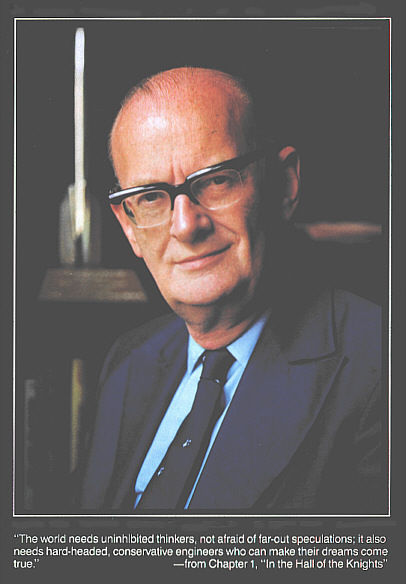 Sir Arthur C Clarke was one of my favourite writers since the age of ten when I first read the Sentinel and when my Dad first took me to see a special showing of 2001: A Space Odyssey. Clarke's extraordinary visionary prowess and ability to render amazing concepts in the most approachable language have allowed his work to endure in timeless fascination.
His friend and fellow futurist Isaac Asimov summed up, not only what science-fiction and Clarke's fiction in particular means to me, but what it means to countless people across the world:
"Individual science fiction stories may seem as trivial as ever to the blinder critics and philosophers of today - but the core of science fiction, its essence, has become crucial to our salvation if we are to be saved at all."
The BBC's Alastair Lawson recalls an interview in Sri Lanka with the legendary science-fiction writer who died on Wednesday:
http://news.bbc.co.uk/1/hi/technology/7306743.stm
Wednesday, 27 February 2008
Nokia 888 Phone and Morph Concepts
 The Nokia 888 was a bracelet-like fantasy phone concept designed by Tamer Nakisci. It won the
 Tuesday, 26 February 2008
Stock exchange for 'grid' computing?
Computer scientists and economists in Spain, the UK, Italy and Germany have developed a successful decentralized, free-market approach to grid computing.
Called CATNETS, it showed that a free-market network can be much bigger than a centrally administered one without becoming bogged down by administrative overheads.
Called CATNETS, it showed that a free-market network can be much bigger than a centrally administered one without becoming bogged down by administrative overheads.
http://physorg.com/news123167512.html
Friday, 8 February 2008
New Electronics Promise Wireless at Warp Speed

Company uses nanoscale metals to build faster radios to wirelessly process video and other massive data files. Wireless networking technology will one day deliver high-definition video content and other large data files via the airwaves far faster than that information can be now be delivered over wired systems.
http://www.sciam.com/article.cfm?id=metal-insulator-electronics-wireless

Subscribe to:
Comments (Atom)

Get rid of your computer screen and put a contact lens in your eye instead and immerse yourself totally in cyberspace. The future is here!